Things to do in winter – Esztergom to Budapest

I’m now writing from Venice: My base camp, nest, better still my port. What am I doing here? Many things. First of all, my mum has undergone a very serious operation for a bad illness, so it was important to come back. She has always supported me in thousand ways, so she’s important. Moreover, I’ve decided to stop in Budapest, over midway through the journey…

Winter is quickly coming and Budapest is a very important milestone: To keep going on would have been a shame, because I’ve so many things to do anyway.

The idea of navigating in winter, rain aside, charmed me because I love cold and snow. However it wouldn’t have been smart to travel with so little daily light and so few hours left to row.

So, the journey will kick off once again next spring, inshallah, to see and tell many things from a possibly different world and eventually landing to Istanbul, where they’re waiting from such a long time.

In Wien too there something to be done: Remember Franz, the captain, and the imperial tugboat Frederic Mistral, that of Franz Joseph? Well, Franz offered me to use the boat and its rooms at will, should I have decided to stay there.

Grateful of so much generosity, I’ve thought for a while about what could be invented there: In a next post I’ll tell you more.

(more…)


On the right track – Wien to Esztergom

Dear close and far away friends, I’m writing from Esztergom, Hungary. It was called Strigonium by ancient Romans: I can’t tell if any of them is still here, but I often get the impression to hear somebody who’s talking in Italian and say to myself: “Where are all of these Italian guys in Hungary?”

But when I get closer to listen what they’re saying, I can’t understand a single word. It’s strange, one of the hardest languages of the planet sounds a bit like Italian if not listened carefully. The Hungarian, belonging to the Ugro-Finnic group of languages, reminds me a little of Lombard speaking.

After all, Attila the Hun passed here too: It wasn’t for him, I wouldn’t be here. Why? Because Venice would have never been built without Attila’s invasions, and those unhealthy lands will still be the reign of coots, mosquito and of the few fishermen enjoying them.

A wonderful book written in the second half of the 16th century by Francesco Tatti (who loved to be called “Francesco Sansovino” from the nom de plume of his dad Jacopo Tatti aka “Sansovino”, famous architect and scholar in Florence and Venice), was titled “De Barbari, onde ebbe origine l’inclita città di Venexia” (Barbarians, origin of the glorious city of Venice). It tells how the legendary birth of the city, on March 23rd 421, was a consequence of the heavy invasions by Attila in 352, that destroyed and scared the roman colonies along the Veneto coastline.

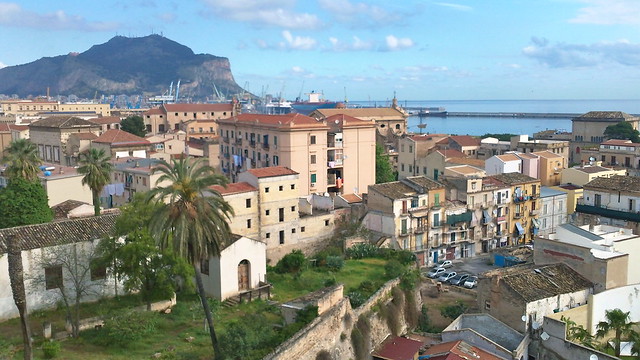
Do I miss Venice? Not at all, here I feel at home and maybe now the barbarians are all in the lagoon to speak Venetian! In these places, I can sense the long lasting civilization of beautiful people with a great dignity, especially the elders. The city is quite nice too, except for the cathedral that’s too bulky.  I’ve already met two Attilas, welcoming me with a smile in the canal that used to be the old Danube course. We’re moored in a nice pier just under the old city fortress.

Here, the Danube is a real river once again, I’ll tell you why later on. (more…)


World Tour of Austria – Grein to Wien

If you only knew, my beloved seafarers, where I’m writing from… A dream, so many sea books and a model Viking boat. I’m in the secret lounge of the imperial steam-tug “Frederic Mistral”, currently moored in Wien!

Clodia is quietly sleeping next to it. I can hear the Danube water since I’m about three quarters below its level. I have the rare privilege to work inside this historical gem, a cat purring on my knees.

Smell of old boat. Humid and cold but I feel great.

This museum piece, built in 1914, at first glance looks like a normal tugboat but beyond the appearance… Its story is fascinating: 26 metres long by 5 wide, draught 1.80, steam engine with max speed of 14 knots.

It was used for tugging but also to control the waterways, hosting aboard a very special guest: No less than Franz Joseph, the emperor.

From the portholes below-deck, surrounded by a sober luxury, he could take a look to the river banks and enjoy a quiet navigation, unnoticed. His cabin is simple and small, so distant to those built on the yacht of nowadays “nouveaux riches”!! The emperor, at the time one of the mightiest man on earth, travelled aboard a tugboat, in a 2 by 1,5 metres cabin with a half bunk-bed. Now that’s class. (more…)